Throughout history, the star has captivated the human imagination. Shimmering from the celestial sphere, it has long served as a bridge between earthly lives and higher realms.
Across art, religion, literature, and folklore, the star appears not merely as a distant burning mass of gas, but as a powerful symbol—radiant with meaning, steeped in wonder, and shimmering with timeless allure.
Famous Myths and Stories Involving Stars
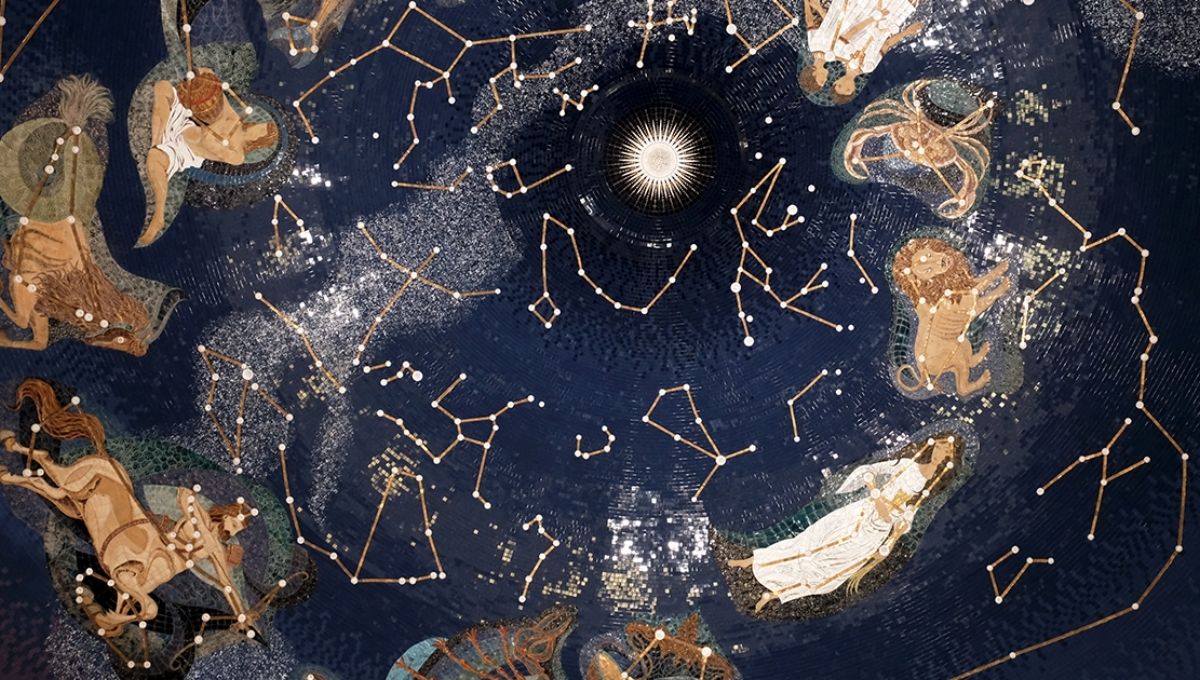
Across civilizations, stars have played pivotal roles in myth and legend. In ancient Greece, the tragic tale of Phaethon ends with his body hurled into the heavens, immortalized among the constellations. The Māori people of New Zealand tell of Matariki, a cluster of stars heralding the Māori New Year, imbued with ancestral presence and renewal.
In Islamic tradition, the star is evoked in the Quran as a divine sign, anchoring humanity’s awareness to a higher truth. The Native American Lakota see stars as the spirits of their ancestors, watching over them with silent vigilance. These stories reflect how cultures throughout time have looked to the stars for explanation, inspiration, and transcendence.
General Meaning of The Star
The star, in its essence, embodies duality—an object of scientific study and a symbol of mysticism. It represents the unreachable yet ever-visible. Stars are seen as beacons of destiny, fate, and potential. They evoke vastness, mystery, and the sublime.
In many cultures, to be born “under a lucky star” is to be destined for greatness, fortune, or protection. As metaphors, stars speak to the human condition—our striving, our fragility, and our search for permanence in an impermanent world.
1. Guidance and Navigation
Before compasses and GPS, stars were humanity’s maps. For sailors navigating the open sea or nomads crossing endless sands, the North Star (Polaris) stood as a steadfast point in the sky, offering direction and salvation.
Symbolically, this enduring role evolved into the idea of the star as a spiritual compass, guiding souls through moral darkness, uncertainty, and peril. In art and iconography, stars often hover above journeys or pivotal decisions, signifying the unseen force that leads the seeker toward purpose or enlightenment.
2. Hope
The star is a whisper of light in an ocean of black. It glimmers against despair, a radiant promise that light remains even in the bleakest night. As a symbol of hope, the star has appeared on everything from wartime propaganda posters to children’s books and Christmas cards.
It tells us to hold on. It tells us the darkness is not infinite. Emily Dickinson once wrote, “Hope is the thing with feathers.” The star, too, is hope—silent, still, shining quietly through the storm.
3. Divine and Spiritual Connection

Stars have long been intertwined with the divine. In Christianity, the Star of Bethlehem announces the birth of the Messiah. In Hindu cosmology, Nakshatras—celestial constellations—determine spiritual influences on one’s life and karmic path.
The Zoroastrians revered stars as entities of divine order and celestial intelligence. Across cultures, stars function as symbols of the sacred—cosmic lanterns in the temple of the heavens, burning with spiritual insight, reminding humankind of its place in a greater, incomprehensible whole.
4. Achievement and Success
To “reach for the stars” is to aspire toward greatness. The metaphor is embedded deeply in modern culture, from motivational slogans to military medals. A gold star awarded to students or soldiers stands as a token of excellence and distinguished merit.
In artistic renderings, ascending toward a star often signifies the culmination of effort, ambition, and transcendence. It is not just success, but luminous success—the kind that shines beyond the ordinary and enters the realm of legend.
5. Fame
The entertainment industry has long adopted the star as its emblem. Hollywood immortalizes actors on the Walk of Fame, embedding stars in concrete as lasting tributes. Celebrities are often called “stars” because they shine brightly, but also because they are distant, admired, yet unreachable.
This interpretation underscores the dual nature of fame: dazzling brilliance coupled with isolation. The star becomes a symbol not only of public adoration but also of the heavy solitude that sometimes accompanies notoriety.
6. Beauty and Wonder
There is an ineffable beauty in the stars. They are ornaments of the night sky, diamonds strewn across a velvet tapestry. Poets have waxed lyrical about their elegance; scientists have marveled at their complexity.
In art, stars often denote wonder and awe—emotions that expand the soul and elevate the human experience. They invite contemplation, silence, and reverence. The Japanese concept of “yūgen”—a profound, mysterious sense of beauty—resonates deeply with the stargazer’s gaze.
Star Symbolism in Mesopotamia

The ancient Mesopotamians were among the first to systematically chart the stars, intertwining astronomy with theology. The star symbol appears frequently in Sumerian and Akkadian inscriptions, often associated with deities such as Ishtar (Inanna), the goddess of love and war, whose eight-pointed star symbolized both fertility and cosmic authority.
Stars were considered divine messengers, part of a celestial bureaucracy that governed human fate. Their regular movements were interpreted as signs, omens, and divine pronouncements, influencing kings, wars, and rituals.
Star Symbolism in Egypt
In ancient Egypt, stars held powerful religious significance. The starry sky was the domain of Nut, the sky goddess, who arched over the earth, her body embedded with stars. The deceased pharaoh was believed to ascend to the heavens and become a star among the imperishable ones.
The five-pointed star was a hieroglyph symbolizing divine guidance and protection. Egyptian temples aligned with star patterns, particularly Sirius—the brightest star in the sky—whose heliacal rising marked the start of the Nile’s flooding and the New Year, reinforcing the star’s role as a bringer of life and order.
Star Symbolism in Greek Mythology
Greek mythology is rich with star symbolism. The heavens served as a vast tapestry upon which stories were immortalized. Orion the hunter, Andromeda the chained maiden, and Cassiopeia the vain queen were all transformed into constellations.
These myths imbued stars with human traits—courage, folly, beauty, tragedy. The Greeks also conceptualized stars as divine expressions of justice and memory, fixed in the sky as reminders of both glory and punishment. They saw in the stars not random lights, but celestial echoes of human narratives.
Symbolism of the Stars in Taoism
In Taoist philosophy, stars represent harmony with the Tao, the underlying principle of the universe. The Big Dipper, or Beidou, holds special significance and is associated with immortality, destiny, and cosmic order.
Taoist temples often include star deities, such as the Three Stars: Fu (fortune), Lu (prosperity), and Shou (longevity), personifying ideals of the good life. Meditation on stars and star maps is part of certain Taoist practices, reflecting a belief in aligning oneself with the rhythms and patterns of the cosmos.
Symbolism of the Stars in African and Indigenous Cultures

Indigenous African and Aboriginal Australian cultures have long held complex astronomical knowledge and spiritual interpretations of the stars. The Dogon people of Mali, for instance, possess intricate mythologies surrounding the Sirius star system, predating modern telescopic observations.
In Aboriginal Australian lore, the stars serve as maps, seasonal calendars, and ancestral stories written in the sky. The Emu in the Sky, formed not by stars but by the dark spaces between them, is a powerful symbol of fertility, cycles, and creation. Among many tribes, stars are ancestors, guiding spirits, and sacred reminders of origin stories.
Star Symbolism in Literature
From Dante’s Divine Comedy to Shakespeare’s sonnets, stars have long served as powerful literary symbols. They often represent fate, unreachable desires, or divine guidance. In Shakespeare’s Julius Caesar, Cassius proclaims, “The fault, dear Brutus, is not in our stars, but in ourselves.” This line encapsulates the tension between determinism and agency.
In Romantic poetry, stars are emblems of eternal beauty and the sublime. Modern literature continues this tradition—stars as metaphors for dreams, for love lost and found, for the infinite possibilities that glitter just beyond reach.
FAQs
1: What does the star symbolize across various cultures?
The star embodies hope, guidance, destiny, and a divine connection, serving as a timeless symbol of inspiration and mystery.
2: How did stars guide ancient travelers?
Stars like Polaris acted as natural compasses, enabling sailors and nomads to navigate vast and unknown territories long before modern instruments.
3: What role do stars play in mythology and folklore?
They are integral to myths and legends, symbolizing heroic journeys, divine intervention, and the eternal interplay between fate and free will.
4: Why is the star considered a symbol of hope?
Its constant, luminous presence in the dark sky offers reassurance, symbolizing the enduring promise of light, renewal, and positive transformation.
5: How is star symbolism portrayed in art and literature?
Stars evoke wonder and beauty, representing aspirations, the sublime, and the quest for meaning, making them a recurring motif in creative expression.
Conclusion:
Across time and culture, the star remains a luminous symbol of hope, guidance, and divine mystery. Whether in myth, religion, or literature, its brilliance inspires reflection, ambition, and awe. As both celestial reality and symbolic muse, the star continues to guide humanity toward wonder, meaning, and the pursuit of higher purpose.
Read More:
Family Oriented: What It Truly Means
Kurt Cobain Birth Chart In-depth Analysis
Phoenix Symbolism & Meaning: Ultimate Guide