

The Symbolism of Graveyards in Dreams
Graveyards have long been seen as places where silence speaks louder than words. In dreams, they often show endings, changes, or facing the reality of death.
To dream of a graveyard may bring feelings from fear to respect, reminding us of life’s shortness and the eternal hope given in scripture. While the place may look sad, its biblical meaning goes beyond physical death, often pointing to spiritual renewal or the closing of a heavy chapter.
Interpreting Your Dream: Graveyards and Emotional Connections

Dreams rarely come without feelings. A graveyard dream may be tied to sadness, memory, or unresolved feelings linked to personal loss. These dreams may also show an inner wish for release, forgiveness, or peace with the past. In a biblical sense, such dreams can show the soul’s deep desire for God’s peace, as well as His call to let go of grief or guilt.
Graveyards and Your Spiritual Path
Spiritually, the graveyard is more than a place of death—it becomes a place of awakening. A believer who dreams of burial grounds may be called to think about how short life is and the promise of eternal life. Graveyard dreams can act as signs on one’s spiritual journey, reminding the dreamer to trust God while letting go of worldly ties.
How Dreams Were Interpreted in Biblical Times
The Sleep-Borne Scrolls: The Ancient Art of Dream Interpretation
In the ancient world, dreams were not seen as random thoughts of the mind. They were seen as messages written by God’s hand, carrying hidden wisdom. Patriarchs, prophets, and kings often looked to dreams as guiding lights, seeking God’s plan through their night visions.
The Bible’s View on Dreams and Their Meaning
Scripture shows dreams as tools of communication between heaven and earth. From warnings of famine to showing destiny, dreams held sacred power. They were not left to random guesses but often read with respect and prayer, knowing God as their true source.
Table: Significant Biblical Dream References
| Dreamer | Reference | Message | Outcome |
| Jacob | Genesis 28:12 | Ladder to Heaven | Promise of the covenant |
| Joseph | Genesis 41 | Pharaoh’s dreams of famine | Preparation and survival |
| Solomon | 1 Kings 3:5 | God offers wisdom | Solomon granted wisdom |
| Daniel | Daniel 2 & 7 | Dreams of kingdoms | Prophetic revelations |
What Graveyards Symbolize in Dreams: A Biblical Perspective
The Graveyard: A Tapestry of Symbolism and Meanings
A graveyard in a dream shows a mix of loss, hope, and eternity. For the believer, it may show the end of sin defeated by Christ’s resurrection. For others, it may show unhealed grief or unfinished matters of the heart.
Graveyard Symbolism in Culture, Literature, and Religion
Across cultures and religions, cemeteries are seen as gateways between this life and eternity. Literature often paints them as serious places for thought, while Christianity sees them as holy grounds awaiting resurrection.
Important Bible Verses About Graves and Burial Places
- Genesis 23:19: Abraham’s purchase of the cave of Machpelah as a burial site.
- John 11:25: Jesus declares, “I am the resurrection and the life.”
- Isaiah 26:19: “Your dead shall live; their bodies shall rise.”
Biblical Interpretations of Graveyard Dreams
To dream of a graveyard in the Bible may point to divine reminders: endings that bring new beginnings, warnings against spiritual laziness, or encouragement to trust God’s promise of eternal life.
Deeper Meanings of Death and the Afterlife in Dreams
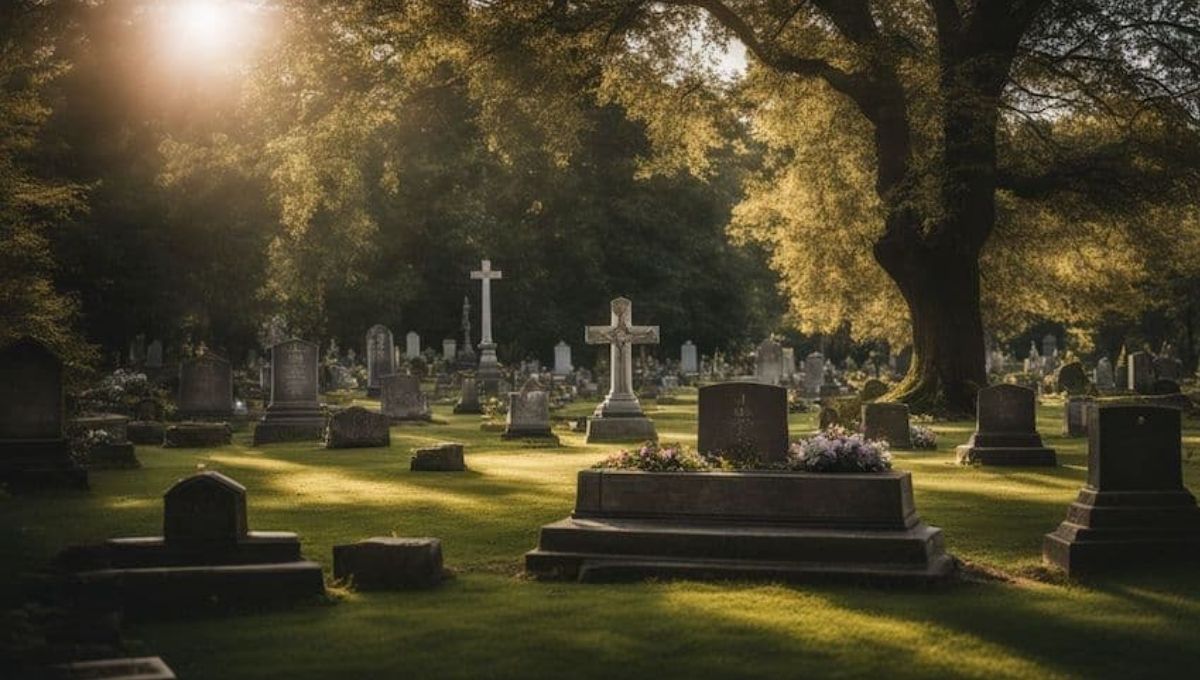
Death as a Metaphor: Endings, Changes, and New Beginnings
Death in dreams rarely means real physical death. Instead, it often shows life changes—leaving old habits, letting go of bitterness, and growing in spirit.
Graveyards as Sacred Spaces: Communion with Ancestors or Spiritual Figures
Dreams of graveyards may also remind us of those who lived before us. In the Bible, they highlight the “cloud of witnesses” in Hebrews 12:1, encouraging faithfulness.
Possible Negative Meanings: Fear, Guilt, or Unresolved Issues
Not all graveyard dreams are peaceful. Some may show hidden guilt, fear of judgment, or the weight of unfinished matters. These dreams call the dreamer to seek healing, forgiveness, and peace with God.
Table: Common Emotional Responses in Graveyard Dreams
| Emotion | Possible Meaning |
| Fear | Worry about death or sin |
| Sadness | Grief over personal loss |
| Peace | Trust in God’s promises |
| Confusion | Inner struggles are not solved |
Biblical Case Studies of Dream Interpretation
Joseph’s Dream Interpretations in the Book of Genesis
Joseph, the dreamer of Egypt, is a model for understanding God’s messages through dreams. His readings saved nations from famine and showed God’s plan in history.
Daniel’s Prophetic Dreams and Their Biblical Meaning
Daniel’s visions in Babylon carried strong prophecies of future kingdoms. His trust in God gave him the wisdom to explain mysteries beyond human knowledge.
Table: Comparing Daniel’s Principles with Modern Applications
| Daniel’s Principle | Modern Application |
| Dreams come from God | Prayerful thinking |
| Seek divine guidance | Bible meditation |
| Interpret with humility | Avoid pride |
| Prophecy aligns with Scripture | Test with God’s Word |
Modern Christian Views on Graveyard Dreams
What Modern Christian Scholars Say About Graveyard Dreams
Today’s Bible teachers see graveyard dreams as symbols of change, repentance, and spiritual renewal. They stress that such dreams should be seen through faith rather than fear.
How Modern Christians Interpret Dreams of Graveyards
Believers today often see these dreams as calls to grow closer to Christ—by facing sin, healing old wounds, or embracing the hope of resurrection.
Collection of Modern Testimonies About Graveyard Dreams
- A woman dreamed of walking through a cemetery, later seeing it as leaving behind harmful habits.
- A pastor shared repeated graveyard dreams that helped him reconcile with his estranged family.
- A believer dreamed of visiting a cemetery and felt peace, trusting eternal life.
How to Understand and Reflect on Your Own Dreams
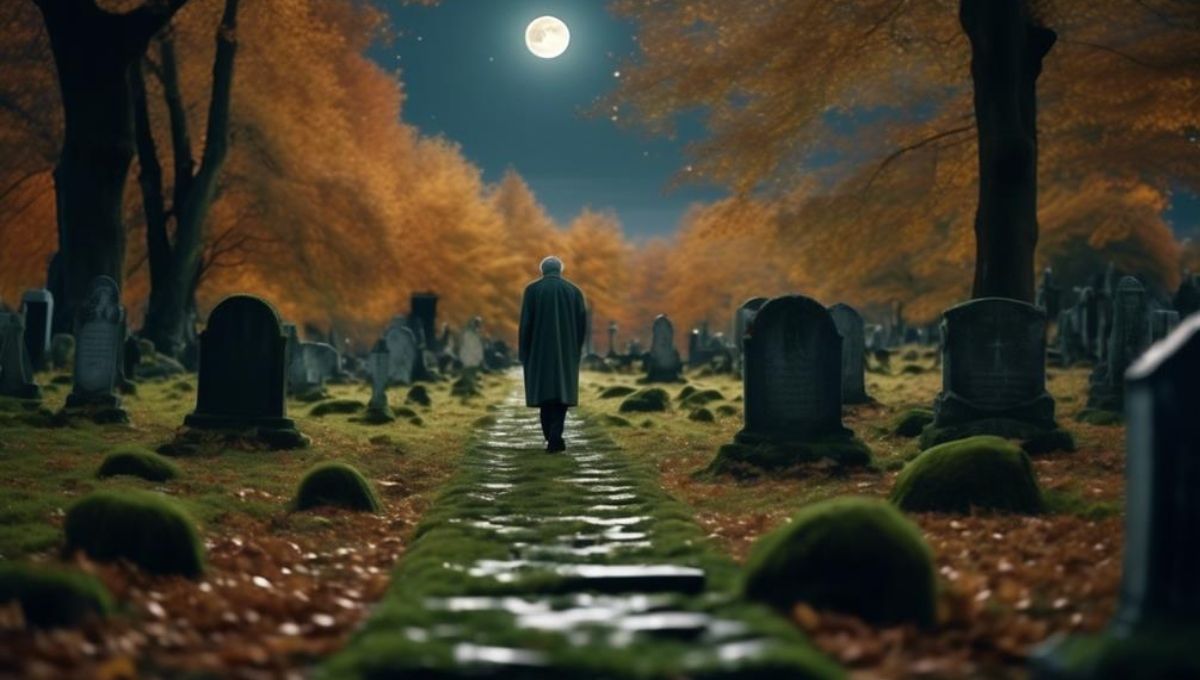
Interpreting Your Own Dreams: Practical Tips and Guidance
Keep a notebook by your bed. Write down your dream as soon as you wake. Look for repeating signs, feelings, and connections to scripture.
A Journey into the Unconscious
Dreams mirror the soul. They show hidden desires, fears, and struggles, giving insight into the deeper parts of your being.
The Art of Decoding Symbols
Symbols in dreams work like parables. A grave may not mean death but may instead show closure, forgiveness, or even victory.
Common Patterns and Themes
Dreams about cemeteries may show headstones, open graves, or silent walks. Each detail adds meaning—whether fear, comfort, or reflection.
Understanding Personal Symbols in Your Dreams
Your own life shapes your dream symbols. A graveyard may remind one person of loss, but another may feel peace from it.
The Language of Dreams
Dreams speak in pictures rather than words. Understanding them takes patience, thought, and prayer.
The Space Between Cultural and Individual Meanings
While culture affects meaning, the Bible gives a timeless guide. Balancing culture with personal context leads to a clearer understanding.
Meaning in Context
No dream stands alone. Always consider your current life, feelings, and faith journey when interpreting.
Reflecting Spiritually on Your Dreams
How to Reflect on Your Dreams Biblically
Search the Bible for help. Biblical signs often explain what human thinking cannot.
Daily Dream Journal Reflection
Daily writing of dreams can show patterns over time. This habit builds awareness of God’s messages in the night.
Prayerful Reflection and Discernment
Pray for wisdom. Ask the Holy Spirit for guidance, trusting God to show what is meant for your growth.
Biblical Symbolism as Guiding Lights
Use biblical symbols as keys. Graves, for example, may not point to despair but to resurrection hope.
The Balance Between The Divine And Personal
Interpretation needs humility—balancing God’s message with personal experiences. Dreams are personal, yet their true meaning shines in God’s Word.
FAQs
1. What does it mean to dream about a graveyard in the Bible?
In the Bible, graveyard dreams often show endings, spiritual renewal, and the promise of eternal life.
2. Are graveyard dreams always negative?
No, they can have both positive and negative meanings. Some show fear or guilt, while others show healing, peace, and new beginnings.
3. How were dreams interpreted in biblical times?
Dreams were seen as messages from God. Prophets like Joseph and Daniel explained them with prayer and God’s guidance.
4. Can graveyard dreams reflect personal emotions?
Yes, they may show grief, unresolved issues, or a desire for forgiveness, but also peace and trust in God’s promises.
5. How should Christians reflect on graveyard dreams today?
Christians should pray, study scripture, and keep a dream journal to seek God’s wisdom in understanding their dreams.
Conclusion:
Graveyard dreams in the Bible remind us that endings often bring spiritual renewal. They show letting go of burdens, seeking forgiveness, and trusting God’s promise of eternal life. By reflecting on these dreams with prayer and scripture, believers can find hope, healing, and stronger faith in their journey.
Read More: