
Air conditioning and heating systems rely heavily on refrigerant to efficiently move heat and maintain indoor comfort. When refrigerant levels or flow are disrupted, system performance often declines in ways that are not immediately obvious to homeowners. Uneven temperatures, extended runtimes, and higher energy use can all indicate underlying refrigerant issues. HVAC contractors rely on a combination of observation, technical measurements, and system behavior analysis to accurately pinpoint these problems. Their ability to identify refrigerant issues early helps prevent further strain on equipment, reduces operational inefficiencies, and supports reliable performance during periods of heavy heating or cooling demand.
Observing System Performance Changes
One of the first ways HVAC contractors identify refrigerant issues is by carefully observing how the system performs during normal operation. Changes such as longer cooling cycles, reduced airflow temperature, or difficulty maintaining thermostat settings can indicate a refrigerant imbalance. When the refrigerant is low or improperly circulating, the system often struggles to transfer heat effectively, causing noticeable performance shifts. Contractors should monitor how quickly the system responds when activated and whether it shuts off as expected. These behavioral clues provide early insight into potential refrigerant issues, enabling further investigation before the issue escalates to compressor damage or complete system failure.
Using Pressure and Temperature Measurements
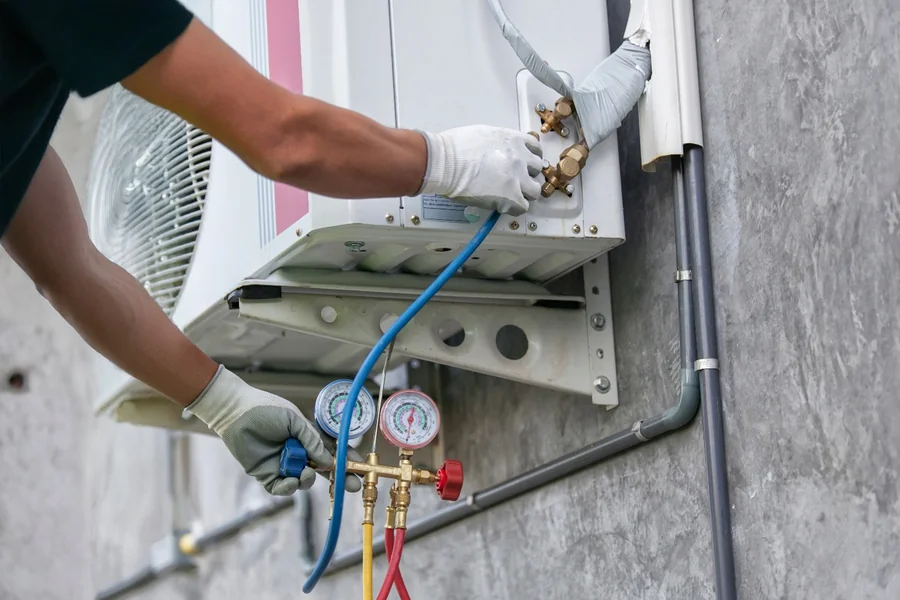
Technical measurements play a major role in identifying refrigerant-related problems. HVAC contractors use gauges and temperature sensors to compare actual readings against manufacturer-recommended ranges. Abnormal pressure levels can signal leaks, blockages, or overcharging, each of which affects system efficiency differently. Temperature differentials between supply and return air also help determine whether refrigerant is absorbing and releasing heat properly. During this diagnostic phase, professionals performing heating and cooling services by Price Heating & Air Conditioning rely on accurate data interpretation to distinguish refrigerant issues from airflow or electrical problems. This measured approach ensures that corrective actions target the true source of inefficiency rather than surface-level symptoms.
Detecting Leaks and Loss Patterns
Refrigerant is not consumed during normal operation, so any loss typically indicates a leak somewhere within the system. HVAC contractors look for oil residue around connections, coils, and valves, as refrigerant often carries oil that escapes at leak points. Electronic leak detectors and ultraviolet dye methods further help pinpoint areas where refrigerant may be escaping. Identifying the leak location is essential before any recharge is performed, as adding refrigerant without sealing leaks only provides temporary relief. By tracing loss patterns carefully, contractors ensure repairs address both the symptom and the cause, protecting the system from repeated performance decline.
Evaluating Evaporator and Condenser Behavior
The evaporator and condenser coils are central to refrigerant function, and their condition reveals valuable diagnostic information. Contractors examine whether the evaporator coil is freezing or the condenser is overheating; both can indicate a refrigerant imbalance. Ice buildup often suggests low refrigerant levels or restricted flow, while excessive heat at the condenser may signal overcharging or airflow limitations. By evaluating how these components interact during operation, HVAC contractors gain insight into the effectiveness of refrigerant circulation. This component-level assessment helps narrow down the issue without unnecessary part replacements or guesswork.
Assessing System Cycling and Sound Patterns
Unusual system cycling patterns and sounds also help HVAC contractors identify refrigerant problems. Short cycling, where the system turns on and off frequently, can result from pressure irregularities caused by improper refrigerant levels. Hissing, bubbling, or whistling sounds may indicate leaks or flow restrictions in the refrigerant lines. Contractors listen carefully during operation, as these auditory signals often provide clues that instruments alone may not reveal. Sound analysis, combined with operational data, improves diagnostic accuracy and enables more targeted repair strategies to restore stable refrigerant circulation.
Why Accurate Diagnosis Matters
Accurate identification of refrigerant issues is essential to protect system efficiency and longevity. Misdiagnosis can lead to unnecessary repairs, repeated service visits, and continued performance problems. HVAC contractors focus on thorough evaluation to ensure that refrigerant levels, pressure, and flow are restored to proper conditions. Accurate diagnosis also supports energy efficiency by preventing systems from operating under strain. When refrigerant issues are resolved correctly, heating and cooling equipment can maintain comfort levels more consistently while reducing wear on critical components.
Identifying refrigerant issues requires a careful balance of observation, measurement, and technical understanding. HVAC contractors rely on performance indicators, pressure readings, leak-detection methods, and component evaluations to accurately pinpoint problems. This systematic approach helps ensure that repairs address the true cause of inefficiency rather than temporary symptoms. When refrigerant issues are properly diagnosed and corrected, systems operate more reliably, energy use becomes more stable, and long-term performance improves. Through precise identification and thoughtful repair, HVAC professionals play a vital role in maintaining dependable indoor comfort across changing seasons.