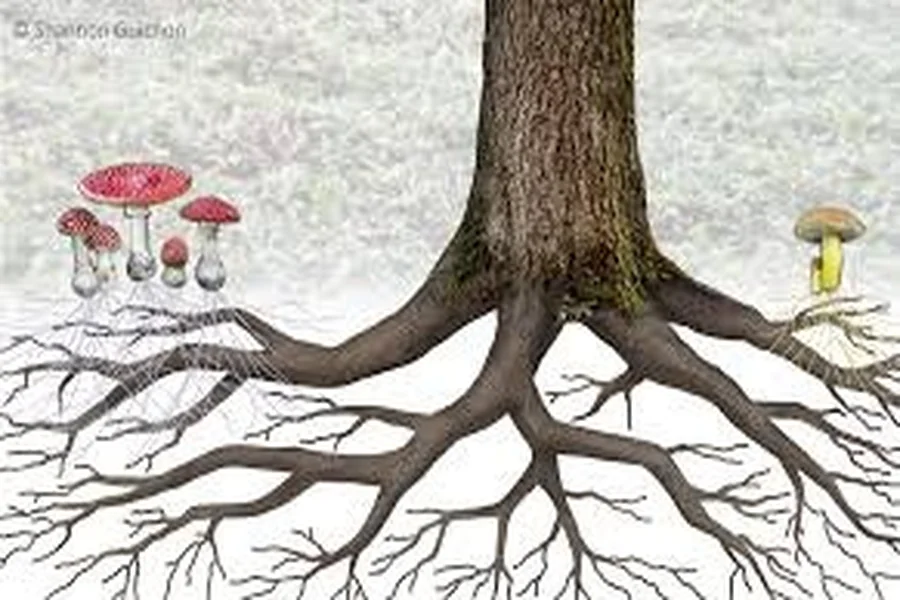

Tree diseases are often misunderstood because their most damaging activity happens far below the surface. While leaves, bark, and branches show visible symptoms, the true origin of many tree health problems lies underground. Root systems form complex networks that support growth, stability, and nutrient absorption, but they also create hidden pathways for disease to move from one tree to another. By the time surface symptoms appear, the infection may already be widespread beneath the soil. Understanding how disease spreads through root systems helps explain why tree decline can seem sudden, widespread, and difficult to control once it becomes noticeable.
Beneath the Surface Networks
Why Underground Spread Is Hard to Detect
Roots extend far beyond what most people imagine, often spreading well past the canopy and intertwining with neighboring trees. These underground connections allow disease to move silently through soil and root tissue without any visible warning signs. Because roots are hidden, early-stage infections go unnoticed while pathogens continue to travel and multiply. Many evaluations conducted through Tree Consulting Services reveal that by the time a tree shows stress above ground, the disease has already spread through portions of the root system or into nearby trees. This hidden activity makes root-based disease transmission one of the most challenging problems in tree management, as visual inspections alone rarely reveal the full scope of infection.
Root Grafting and Shared Pathways
One of the most effective ways tree disease spreads underground is through natural root grafting. When trees of similar species grow close together, their roots may fuse as they expand. These grafts allow water and nutrients to move between trees, but they also provide a direct route for pathogens. Once a disease enters one tree’s root system, it can pass into neighboring trees through these shared connections without ever interacting with the soil. This explains why disease often appears in clusters rather than isolated cases. Root grafting creates a hidden network where infection spreads quietly, making it difficult to stop the disease by treating or removing only the visibly affected tree.
Soil-Borne Pathogens and Root Contact
Not all underground disease spread requires direct root fusion. Many pathogens live naturally in the soil and infect trees through root contact. These organisms attach to fine roots responsible for water and nutrient uptake. As roots grow, they encounter contaminated soil zones and carry pathogens deeper into the root structure. From there, infections move inward toward larger roots and eventually the trunk. This process unfolds slowly and without visible disruption at the surface. Over time, infected roots release pathogens back into the soil, increasing the contaminated area and raising the risk for nearby trees. This cycle allows disease to persist and expand even when no immediate symptoms are visible above ground.
Water Movement and Disease Transport
Water plays a major role in spreading disease through root systems. Poor drainage, heavy rainfall, or excessive irrigation can move pathogens through the soil more efficiently. Saturated conditions allow disease organisms to travel along water-filled pores and reach healthy roots. These conditions also reduce oxygen availability in the soil, weakening root defenses and making infection easier. Once pathogens enter the root system through water movement, they can disrupt nutrient transport and weaken structural stability. Because water movement happens below the surface, the spread of disease often continues unnoticed until multiple trees show signs of decline at the same time.
Environmental Stress and Root Vulnerability
Tree roots become more susceptible to disease when environmental stress is present. Soil compaction, construction damage, drought, and nutrient imbalance all weaken root tissue. Stressed roots are less capable of resisting pathogens and healing from minor injuries. When one stressed tree becomes infected, it sheds more disease organisms into the surrounding soil, increasing exposure for nearby trees. This explains why outbreaks often follow environmental disturbance. Root systems already under stress create favorable conditions for disease to spread more rapidly and widely through underground networks, amplifying damage across entire landscapes rather than affecting isolated trees.
Long-Term Impact on Tree Groups
Once disease spreads through root systems, its effects are rarely limited to a single tree. Groups of trees may decline gradually as infections move through shared roots or contaminated soil. Removing a visibly affected tree does not always eliminate the problem, as infected roots may remain underground. New trees planted in the same area may also become infected if pathogens persist in the soil. This lingering presence makes root-spread disease difficult to resolve and explains why some areas experience repeated tree failure over time. Understanding these long-term dynamics highlights the importance of early intervention and soil-level awareness.
Conclusion
Tree disease spreading through root systems is a hidden process that often advances long before surface symptoms appear. Root grafting, soil-borne pathogens, water movement, and environmental stress all contribute to underground transmission that is difficult to observe and control. Because roots connect trees in unseen ways, infections can move quietly across entire landscapes. Recognizing how disease travels below the surface helps explain why tree decline can seem sudden and widespread. Addressing soil conditions and root health early plays a critical role in limiting long-term damage and supporting healthier tree populations over time.