


Sitting outside in the sun feels great, but your outdoor furniture doesn’t enjoy it as much as you do. If your bright patio cushions are losing their color, or your solid wooden chairs look old before their time, the main cause is usually strong sunlight. The good news is that there’s a simple and stylish way to protect them: shade sails.
These modern fabric canopies create a barrier between your furniture and the sun, helping keep colors brighter for longer and materials in better condition. They do this by blocking harmful UV rays and lowering heat, which are the main reasons furniture fades and wears out.
From home gardens to busy restaurant terraces, shade sails are now common because they look good and work well. They offer flexible shade and let you enjoy your outside space in comfort without giving up on style.
For a wide range of adjustable shade options made to suit your needs, including quality shade sails, you can check a trusted supplier such as Shade4You.
What Causes Outdoor Furniture to Fade?
To protect your furniture, you first need to know what you’re fighting against. The sun may give us warmth and light, but for patio sets, loungers, and decorations, it can be very harsh. Sun radiation, high temperatures, and other weather conditions all work together over time to remove color and weaken materials.
Sunlight Exposure and UV Radiation
The main problem is sunlight, especially its invisible part: ultraviolet (UV) radiation. UV rays are very strong, and no material is completely safe from them. UV light triggers a process called photo-degradation, where sunlight and oxygen change the look and strength of materials.
In fabrics, this breaks down dyes so colors fade and become patchy. In other materials, it can lead to cracking, loss of flexibility, and surface damage. The longer furniture sits unprotected in full sun, the worse and more permanent this damage becomes.
Heat, Moisture, and Environmental Factors
UV rays are not the only problem. The sun also brings intense heat. High temperatures dry out many materials, especially natural ones like wood and leather, which then stiffen, crack, and look worn. Moisture from rain or humidity adds another layer of stress. Even materials that cope well with water can develop mold and mildew if they stay damp, especially in warm conditions.
On top of this, dust and pollution collect on surfaces and speed up aging. All of these factors together mean your furniture is constantly under pressure and needs solid protection.
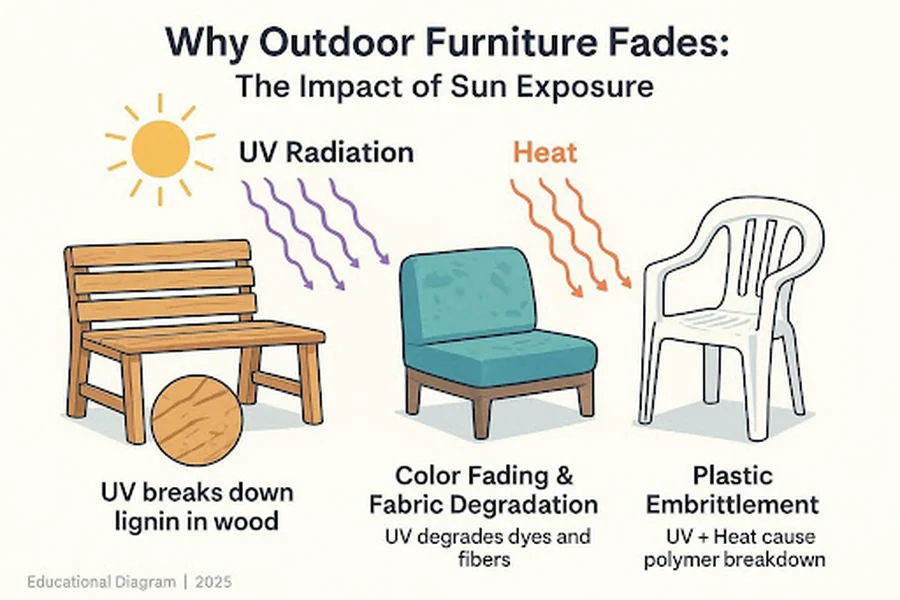
Vulnerable Materials: Wood, Fabric, Plastic, and Metal
Different materials react in different ways to the sun, but all can suffer:
- Wood: Can darken, bleach, or “burn” in strong sun. It often needs regular sanding, painting, or varnishing to keep UV rays from breaking down the surface.
- Fabrics: Usually the first to fade. Many outdoor fabrics have limited sun protection, and natural options like linen and silk lose color quickly. Darker colors tend to fade faster than lighter ones.
- Plastic (including recycled plastic): Can fade and become brittle over time, especially lower-quality products exposed to strong sunlight.
- Leather: Loses natural oils in heat and sun, becoming dry, stiff, and cracked.
- Metal: Doesn’t fade like fabric but can expand with heat, and if coatings break down under UV light, rust and corrosion can start.
How Shade Sails Prevent Sun Damage to Outdoor Furniture
Now that we’ve covered what harms your outdoor pieces, we can look at how shade sails help. These fabric canopies do more than just create a cool place to sit. They are a smart, physical shield that cuts down the main causes of damage: UV light and excess heat.
Blocking Harmful UV Rays
The core job of a shade sail is to block UV rays. Good-quality shade sail fabrics are made to limit UV radiation, with many blocking up to 95% of harmful UV light. This barrier stops most UV rays from hitting your furniture and starting the photo-degradation process that causes fading, discoloration, and material breakdown.
You can think of a shade sail as a strong sunblock for your patio furniture, helping keep colors closer to their original shade and materials stronger for longer.
Reducing Heat and Temperature Exposure
Shade sails also lower temperatures in the covered area. Unlike solid roofs, they let air move freely underneath, so heat doesn’t build up as much. This airflow makes the space cooler and more comfortable. Tests show that the ground under a shade sail can be up to 20 degrees cooler than an area in full sun.
With lower temperatures, wood and leather are less likely to dry out and crack, and plastics are less stressed by heat. This steady, cooler environment helps furniture last longer and stay in better condition.

Minimizing Color Fading and Material Wear
Because shade sails cut UV rays and reduce heat, they greatly slow fading and material wear. With fewer UV-triggered chemical reactions, fabrics keep their color longer. Lower heat helps wood and leather hold on to their natural oils, so they stay flexible instead of becoming brittle.
Plastics and metals benefit too, as they are less likely to break down, warp, or lose coating. All together, this means your outdoor furniture keeps its looks and strength for many more seasons.
Choosing the Best Shade Sail for Furniture Protection
Picking a shade sail is about more than style. The right choice can make a big difference to how long your outdoor furniture lasts. By focusing on a few key points, you can choose a sail that protects well and fits your space.
UV-Resistant Fabrics and Material Options
The most important part of a shade sail is the fabric. For furniture protection, UV resistance should be a top priority. Some common options include:
| Material | Main Benefits | Typical UV Block |
| High-Density Polyethylene (HDPE) | Strong, long-lasting, resists mold, mildew, and rot | Up to ~95% |
| Solution-Dyed Acrylic | Water-repellent, quick-drying, very UV-resistant, lets in soft natural light | High (varies by brand) |
| PVC-Coated Polyester | Very durable, good color hold, strong resistance to fading | High (often used where long life is needed) |
Many fabrics say they are UV-resistant, but no material can completely stop long-term sun effects. Look for terms like “fade-resistant” instead of “fade-proof,” and choose quality, purpose-made fabrics instead of cheap general-use materials. Better fabric usually means better protection and a longer-lasting sail.
Size, Shape, and Coverage Area Considerations
Before buying, think carefully about the area you want to shade. Shade sails come in different shapes and sizes, such as:
- Triangles
- Squares
- Rectangles
Measure your outdoor space and note where your furniture sits during the day. The sail should cover your main seating or dining area during peak sun hours. If one sail can’t cover everything, you can use more than one and overlap them. This gives extra shade and can create an attractive layered look.
Mixing square and triangular sails, for example, can create interesting designs while reducing spots of direct sun that cause uneven fading.
Color Impact: Lighter vs. Darker Shade Sails
Color choice affects both style and comfort:
- Lighter colors: Reflect more light and can help keep the area underneath a bit cooler.
- Darker colors: Often block more UV because of stronger pigmentation and can create a bold visual effect.
Modern high-quality fabrics are made to resist fading, whatever the color, but sunlight and weather will still slowly affect brightness over the years. If appearance is a high priority, choose a color that suits your home, garden, or business style and decide whether you want the shade sail to blend in or stand out as a feature.
Installation Tips for Effective Sun Protection
Even the best fabric will not work well if the sail is installed poorly. Good planning and correct mounting help keep the sail safe, tight, and in the right place to shade your furniture.
Correct Placement and Anchor Points
Start by studying how the sun moves across your outdoor area. Place the sail so it blocks the sun when it is strongest, usually around midday and early afternoon. The corners of the sail should be fixed to strong, stable points such as:
- Sturdy posts set in concrete
- Solid walls
- Large, healthy trees (used with care and correct fittings)
Stainless steel eye bolts and other stainless fittings are often used because they resist rust and hold the tension well. Loose fittings, weak supports, or poor alignment can make the sail flap, sag, wear out faster, or even become unsafe.
Angle and Height for Maximum Shade
The angle and height of the sail strongly affect how well it works. A common setup is:
- Angle: 20-40 degrees from horizontal
- Higher points on one or more sides, lower on the opposite side
This sloping angle keeps the fabric tight, improves wind resistance, and lets rainwater run off instead of collecting in the middle. Adjustable ropes, turnbuckles, or ratchet straps help keep the sail firm and let you fine-tune the shape. Hanging the lowest corner closer to the sun’s path will help keep shade over your furniture as the sun moves through the day and across the seasons.
Care and Maintenance of Shade Sails and Outdoor Furniture
Shade sails and outdoor furniture sit outside all year, so simple, regular care helps them last much longer and look better.
Regular Cleaning to Prevent Mold and Mildew
Dirt, bird droppings, leaves, and pollution can collect on surfaces and lead to stains and mold. Simple cleaning steps include:
- Shade sails: Use mild soap and lukewarm water with a soft brush or sponge. Rinse well and let them air dry. Avoid strong chemicals, bleach, or pressure washers, which can weaken fibers and coatings.
- Furniture: Wipe down with soapy water regularly. For seasonal cleaning, wash cushions, scrub frames, and let everything dry fully before using covers or moving items into storage.
Regular cleaning keeps your setup looking good and helps prevent mold, mildew, and early material breakdown.
Inspection for Wear, Tear, and UV Degradation
Check your shade sails and furniture a few times a year for early signs of damage:
- On shade sails: Look for small holes, frayed stitching, stretched corners, and loose or rusty fittings.
- On furniture: Watch for fading, cracking, chipped paint, loose joints, or rust on metal parts.
UV light slowly weakens even UV-resistant fabrics, so catching problems early lets you repair small issues-such as patching tears or re-staining wood-before they grow into bigger, more expensive damage.
Seasonal Adjustments and Storage Recommendations
Adjusting how you use and store shade sails and furniture across the year helps them last longer. Simple steps include:
- Taking down shade sails before heavy snowfall, hail, or very strong winds are expected.
- Storing furniture in a shed or garage during harsh winters or long periods of bad weather, especially if it is made from softer woods or fabrics with lower UV resistance.
- Using well-fitted covers if storage indoors is not possible. Covers should fit properly-too loose or too tight can cause problems with moisture and pests.
- Always drying sails and furniture fully before covering or storing to prevent mold growth.
Common Questions About Shade Sails and Furniture Fading
People often have similar questions about how shade sails work and what to expect from them. Here are clear answers to the most frequent ones.
Do Shade Sails Provide Complete UV Protection?
High-quality shade sails, especially HDPE options, can block up to about 95% of harmful UV radiation. This cuts UV exposure sharply and greatly reduces fading and damage.
However, no fabric can block 100% of UV for an unlimited time, and some rays can still reach shaded areas from the sides or through small gaps. Think of shade sails as very strong UV filters that give “fade-resistant” rather than “fade-proof” protection.
Are Shade Sails Waterproof or Just Sun-Protective?
Most standard shade sails are built mainly to protect from sun, not heavy rain. Their woven structure allows air to pass through, which helps keep the area cooler but also lets water drip through during stronger showers.
Light rain is often fine, but intense rainfall may soak through. Installing the sail on a slope (20-40 degrees) helps water run off instead of pooling. If you need full rain cover, you may want extra roofing or special waterproof sail fabrics, understanding that these may reduce airflow and make the space feel warmer.
Can Shade Sails Be Used Year-Round?
Good shade sails are strong and can handle everyday weather like sun, light rain, and gentle to moderate wind. Whether you can keep them up all year depends on your local climate and the product you choose.
Very strong winds, hail, and heavy snow can damage the fabric or supports. In areas with rough winters or storms, many people remove their sails during the cold or stormy months. Following the maker’s care and weather-use guidelines helps keep your sail in good condition for longer.
How Do Shade Sails Affect the Lifespan of Outdoor Furniture?
Shade sails greatly extend how long outdoor furniture stays in good shape by cutting down UV exposure and lowering heat. Less UV means slower fading and weaker chemical breakdown of fabrics, plastics, wood, and finishes.
Lower heat reduces drying and cracking in wood and leather and lowers stress on plastic and metal parts. This means fewer repairs, less repainting or re-staining, and fewer early replacements.
A well-chosen and well-installed shade sail is a long-term help for protecting your investment in outdoor furniture and keeping your patio or garden area looking inviting for years.


