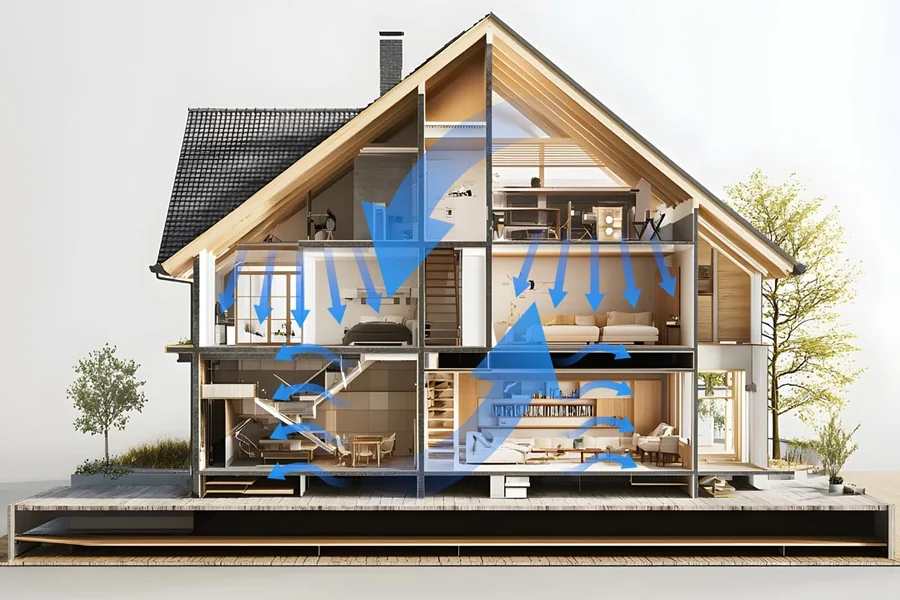

Maintaining comfort in a multi-level home can be challenging because temperatures vary across floors. Warm air rises, cooler air settles, and daily activities add heat unevenly throughout the structure. As a result, upper floors may feel stuffy while lower levels remain cool, or the opposite may occur during colder seasons. HVAC contractors play an important role in addressing these imbalances by focusing on airflow behavior, system design, and how occupants use each level of the home. Their work focuses on ensuring consistency without overloading equipment. By understanding how air moves vertically and how building layouts affect comfort, contractors help homeowners maintain consistent temperatures across all levels while supporting efficient system operation.
Comfort Challenges in Vertical Living
-
Understanding Temperature Stratification Across Floors
One of the primary challenges in multi-level homes is temperature stratification, where different floors experience noticeable variations in comfort. HVAC contractors begin by studying how air is distributed within the system when it is running. Heat gain from sunlight, appliances, and occupancy often concentrates on upper floors, while lower levels retain cooler air. Contractors evaluate return-air placement, supply-vent locations, and stairwell airflow pathways. This assessment helps identify why one floor feels consistently warmer or cooler than others. By understanding stratification patterns, contractors can recommend adjustments that promote more even distribution. These insights form the foundation for improving comfort without requiring frequent thermostat adjustments that strain the system and frustrate occupants.
-
Balancing Airflow for Consistent Room Conditions
Airflow balance is central to improving comfort in multi-story homes. HVAC contractors analyze how much air reaches each level and whether that airflow matches the heating or cooling demand of those spaces. In some cases, ductwork delivers too much air to lower floors while upper rooms receive insufficient flow. Contractors measure air volume and pressure to identify imbalances, then adjust dampers or recommend duct modifications to redirect airflow. In neighborhoods where Auburn HVAC contractors frequently encounter tall homes, these airflow evaluations are essential for reducing persistent hot and cold spots. Proper balance ensures each floor receives appropriate conditioning, helping rooms maintain stable temperatures regardless of their vertical position.
-
Using Zoning Strategies to Match Living Patterns
Multi-level homes often have varied usage patterns, with bedrooms upstairs and living areas below. HVAC contractors improve comfort by aligning system operation with how spaces are used throughout the day. Zoning strategies allow different floors or sections of the home to respond independently to temperature needs. Contractors evaluate whether existing systems can support zoning or require upgrades to accommodate separate controls. Dividing the house into zones helps prevent one area from being over-conditioned simply to satisfy another. This targeted approach reduces unnecessary cycling and creates environments that better match daily routines. Zoning supports comfort by recognizing that not all spaces require the same level of conditioning simultaneously.
-
Duct Design and Vertical Air Movement
Duct design plays a significant role in how effectively conditioned air reaches each floor. HVAC contractors inspect duct runs for length, insulation quality, and leakage that may reduce performance. In multi-level homes, long vertical duct runs can lose pressure, limiting airflow to upper levels. Contractors may recommend sealing leaks, resizing sections, or improving insulation to preserve air temperature as it travels. They also consider how return ducts draw air back into the system, ensuring balanced airflow. Effective duct design ensures consistent delivery and return, enabling the system to operate smoothly and maintain comfort across floors.
-
Thermostat Placement and Control Accuracy
Thermostat placement can significantly affect comfort in vertical homes. HVAC contractors assess whether thermostats accurately represent average conditions or are affected by localized heat sources, drafts, or stairwells. A thermostat on a middle floor may not accurately reflect conditions upstairs or downstairs, resulting in uneven comfort. Contractors may suggest relocating thermostats or adding additional sensors to capture temperature variations more accurately. Improved control accuracy allows the system to respond appropriately to real conditions rather than distorted readings. When controls reflect true indoor temperatures, the HVAC system can maintain balance more effectively, reducing the need for constant manual adjustments.
-
A Focused Adjustment Insight
Small system adjustments often make a noticeable difference in multi-level comfort. HVAC contractors may fine-tune fan settings, airflow timing, or temperature differentials to reduce stratification effects. These refinements improve the rate at which air circulates between floors and the uniformity of temperature distribution. While subtle, these changes support smoother operation and enhance comfort without major system changes.
-
Long-Term Comfort Through System Coordination
Improving comfort in multi-level homes is not a one-time fix but an ongoing process of coordination between equipment, layout, and usage habits. HVAC contractors consider insulation levels, window exposure, and lifestyle changes that affect heating and cooling demand. They may recommend periodic evaluations to adjust settings as seasons shift or household needs evolve. By viewing the home as a dynamic system rather than isolated rooms, contractors help maintain comfort over time. This long-term approach ensures that improvements remain effective as conditions change, supporting consistent indoor environments across all levels.
Multi-level homes present unique comfort challenges due to vertical air movement and uneven heat distribution. HVAC contractors address these issues by studying airflow patterns, balancing delivery, refining controls, and aligning system behavior with daily living patterns. Their work focuses on creating stability rather than quick fixes, helping each floor operate comfortably without excessive strain on the system. Through thoughtful assessment and targeted adjustments, contractors support consistent temperatures and smoother operation. When comfort is approached as a whole-home objective, multi-level living becomes more enjoyable, efficient, and adaptable to changing needs throughout the year.