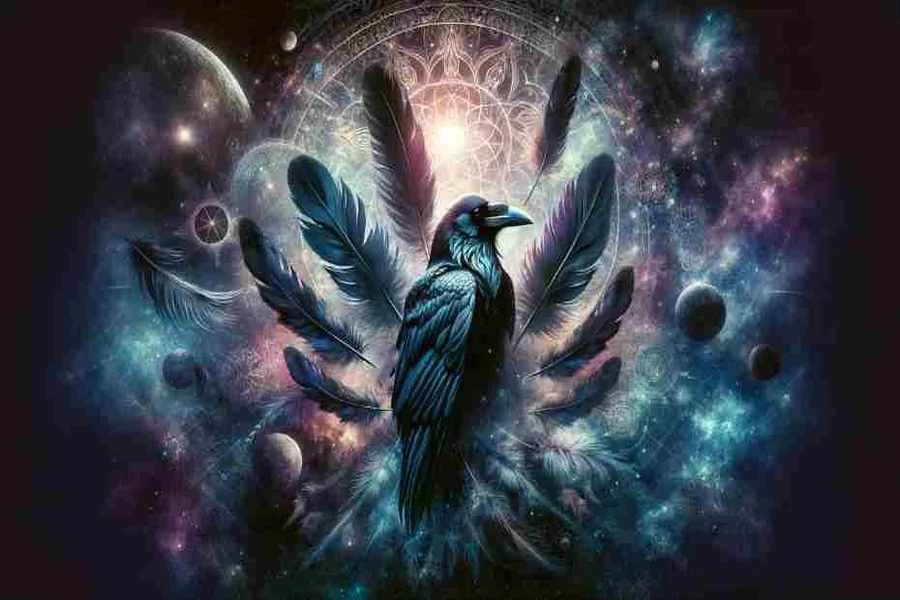

Ravens have been considered as very enigmatic and strong birds. They have profound meanings across cultures which relate to light and shadow. Centuries of myth, story, and spiritual belief have been inspired by their black plumage, keen wit and their eerie cry. The raven remains a subject of fascination to humans whether considered as messengers, tricksters or as guides. Understanding raven symbolism gives insight into transformation, mystery, and the balance between life and death.
The Historical Significance of Raven Symbolism
Thousands of years ago vultures were seen in myths and legends. They were regarded as wise and oracular animals in ancient times. People held the notion that ravens could move around the physical and spiritual domains. Their appearance usually meant change, enigma or concealed information that was to be disclosed.
Greek mythology is linked to Apollo, which was the god of prophecy and the ravens. They were his messengers and were frequently associated with the truth and vision. Ravens were also considered to be holy by the Norse gods. Odin, the god of wisdom, possessed two ravens called Huginn and Muninn, that is, thought and memory. They were birds that flew round the world on a daily basis to bring information which is a symbol of profound awareness and perception.
Throughout history, raven symbolism has stood for intelligence, mystery, and spiritual insight. Although ravens are not always popular, they are also looked up to because of their quality of looking beyond the normal.
Ravens: Mythology and Folklore

Ravens have been used in mythology in many cultures. The raven was related to war and change in Celtic mythology. The goddess Morrigan frequently appeared under the guise of a raven in battles, and she was in charge of the dead ones and led them to the afterlife. This made the bird a representation of death and rebirth.
In Native American traditions, raven symbolism is complex and powerful. The raven is considered a trickster among the tribes of the Pacific Northwest that brings light to the world. He is jocular, intelligent and curious. Although he may be naughty, his moves usually result in a good change or invention of something.
The Asian cultures also associate ravens with fidelity and defense. A three-legged raven called Yatagarasu is used in Japan as a symbol of the sun power and divine guidance. It guides humanity to spiritual clarity and truth.
According to most African mythology, ravens are the messengers of the gods, and they interface the human world with the divine. They are regarded as secret keepers and agents of change. This universal presence across cultures proves how deeply raven symbolism is rooted in human consciousness.
Spiritual Meaning of Raven Symbolism
Ravens are spiritually believed to be the guides, which assist individuals to go through change. The appearance of a raven usually means that something is going to happen, and it is not necessarily going to be pleasant. Nevertheless, this change is most often accompanied by development and self-realization.
Ravens are related to shadow work, which is the process of confronting fears and concealed emotions. They teach us to live with the dark sides of us as opposed to shunning them. The black color of the raven is a sign of the unknown, mysteries of life, and the bravery to look inside.
Ravens may be a symbol of wisdom, communication, and messages of higher levels in dreams and spiritual visions. They are viewed by many spiritual practitioners as the ability to help people get in touch with their intuition and inner truth.
Raven symbolism in this sense is not about fear but awareness. It is a lesson that wisdom usually follows the confrontation with the darkness, and it is clearer that way. The raven is a call to individual reflection and to change- two vital elements of spiritual development.
The Raven as a Sign of Clearness and Changeability
Ravens are birds that are highly intelligent. They are able to solve problems, use equipment and communicate in complicated manners. Due to these characteristics, they have been adopted to symbolize intelligence, flexibility, and curiousness.
Symbolically, ravens are a reminder that we should think clearly and be creative with our problems. They are also ingenious and can adapt well in virtually any environment. This is an expression of how human beings can adapt and survive even when things are not going well.
The other symbol is ravens which mean power of observation. They can see things that others would not see, and we learn to be aware of the signs and trends that are all around us. This intuitive sense in the majority of cultures is associated with prophecy and vision.
When we encounter a raven or find ourselves being compelled to listen to its vitality, it could be a reminder that we should trust our instincts and watch out to the possibilities and conceal facts. In this way, raven symbolism connects intelligence with awareness and transformation.
Light and Shadow in Raven Symbolism
One of the most intriguing aspects of raven symbolism is its connection to both light and darkness. The ravens are common at the areas of life and death thus depicting the equilibrium between the two.
In certain cultures, they are regarded as death or bad omen. This darker image has been added to by their black color and their identity of battlefields and cemeteries. This symbolism, however, is not necessarily bad. The relation of the raven to death also means new birth, re-birth and cyclic nature of life.
Darkness is frequently a symbol of the unknown in spirituality, a place of possibilities and not intimidation. Ravens led people through this area in order to demonstrate that the knowledge of the shadow can help to find enlightenment.
Read More: Black Cat Spiritual Meaning and the Deep Symbolism Behind
Modern Interpretations of Raven Symbolism

Nowadays, ravens still interest artists, writers and thinkers. They tend to be regarded as an emblem of mystery, independence and change. The famous poem by Edgar Allan Poe, The Raven, brings to the picture of a mysterious and haunting creature another symbolic element of the bird as a sender of sadness and lost love.
Ravens are used in fantasy and mythological fictional work in popular culture, such as Game of Thrones, where they are used to convey significant news. The fact that they exist is usually an indication of richness, smartness, and enigma.
The raven is nowadays regarded by a lot of people as a totem or spirit animal. Raven people tend to be able to think and often are intuitive, and unconcerned with changes. They are enticed towards the discovery of secrets and leading others to discover themselves.
The modern understanding of raven symbolism blends ancient wisdom with personal meaning, encouraging people to look beyond appearances and find insight within transformation.
Final Thought
Raven symbolism represents mystery, transformation, and intelligence. It teaches us that life is a journey of the uncharted that has to be discovered. As a mentor, messenger or agent of change, the raven reminds us not to ignore our inner voices and accept the light and dark elements of our beings.
This bird has been feared, respected, and admired during the course of history. Its existence causes us to think and see and make our lives conscious. The raven does not mean doom but wisdom. It teaches to go through difficult situations courageously and also to remember that every end is a new beginning.
FAQs
What does raven symbolism mean spiritually?
Spiritually, ravens represent transformation, wisdom, and the connection between the physical and spiritual worlds.
Is the raven a symbol of death?
While ravens are sometimes linked to death, they more often symbolize rebirth, change, and the cycle of life.
What does it mean if I see a raven in my dream?
Seeing a raven in a dream can mean that transformation or hidden knowledge is about to be revealed to you.
Are ravens considered good luck or bad luck?
In some cultures, ravens are seen as omens of bad luck, but in others, they symbolize protection, guidance, and wisdom.
Why are ravens associated with intelligence?
Ravens are highly intelligent birds known for problem-solving and adaptability, symbolizing mental strength and insight.
What does a raven symbolize in mythology?
In mythology, ravens symbolize prophecy, wisdom, and transformation, often serving as messengers for gods and spirits.
Can the raven be a spirit animal?
Yes, the raven spirit animal represents introspection, creativity, and the courage to explore life’s mysteries.