


Religious but Not Spiritual Meaning

The phrase “Religious but Not Spiritual” challenges how people think in today’s divided world. In a time when society praises independence and personal freedom, many search for meaning through faith based on tradition, structure, and community instead of vague spirituality.
To be religious in this sense means following an organized faith with devotion, discipline, and compassion, rather than relying only on personal feelings. It’s not about rejecting spirituality—it’s about redefining one’s bond with God, built on faith, rules, and teachings.
This idea reflects our inner struggle between freedom and structure, emotion and belief, love and law—showing how faith shapes modern identity.
Catchphrase of a Movement
“Religious but Not Spiritual” has become a key phrase for a small yet growing group worldwide. Unlike the popular SBNR (Spiritual But Not Religious) trend, this group believes that religious institutions, rituals, and traditions give life a deeper purpose and connection.
People in this group avoid labels like “New Age” or “spiritual seekers.” They see religion not as a restriction, but as a source of community, strength, and shared meaning. For them, religion brings freedom through order, belonging, and purpose—offering peace in a fast, self-focused world.
In this way, being religious becomes a choice for meaning over chaos, truth over trend, and community over isolation.
Spiritualization and Seeking Truth

Modern culture has become obsessed with being “spiritual.” Many people are searching for truth and goodness outside traditional faith systems. But in this constant search, truth often becomes personal and unclear.
Being religious but not spiritual encourages us to find truth through learning, devotion, and faith, not through random beliefs or passing emotions.
The soul doesn’t just want peace—it wants a real relationship with God and others. True understanding comes when curiosity turns into worship and trust in God’s wisdom.
On the Flip Side
Some say being religious but not spiritual can make a person seem too strict or rule-bound, focusing more on laws than love. They think religion limits freedom or emotion.
But real religion, based on justice, kindness, and humility, shows God’s love through good actions and sincerity. It is not a burden—it is a guide to moral and spiritual growth.
The right path lies in balancing faith with emotion, discipline with love, and structure with compassion.
Why We Should Be Religious but Not Spiritual
Being religious but not spiritual helps us see faith as a lifelong promise, not just a temporary feeling. Religion gives stability, purpose, and unity within a community.
Unlike vague spirituality, religion teaches self-control, healing, and moral strength through regular practice. It acts as an anchor in a confusing world, helping people find peace and truth.
Great faith traditions—like Christianity and Catholicism—remind us that beauty, goodness, and truth come from God, not from personal opinion. Being religious means walking a path of grace, growth, and devotion.
Table: Religious vs. Spiritual Perspectives
| Aspect | Religious | Spiritual |
| Foundation | Based on faith, rituals, and teachings | Based on personal experience |
| Community | Shared worship and beliefs | Individual practice |
| Authority | Guided by sacred texts and tradition | Guided by intuition or personal truth |
| Goal | Salvation and devotion | Awareness and inner peace |
| Connection to God | Through prayer and obedience | Through meditation or energy |
| Risk | Can become too strict | Can become unclear or inconsistent |
Religious, but Not Spiritual: A Constructive Proposal
This perspective promotes balance between faith and logic. Religious people might not follow new-age trends, but still value mindfulness and inner peace. They see humans as both spiritual and rational, needing both discipline and reflection.
This path leads to self-growth and grace, echoing the teachings of St. John Paul II, who spoke of love, courage, and humility, guiding us toward God.
Instead of falling into atheism or confusion, this way focuses on balance, truth, and community through faith.
Categories Matter: On Philosophy of Religion and Social Identity
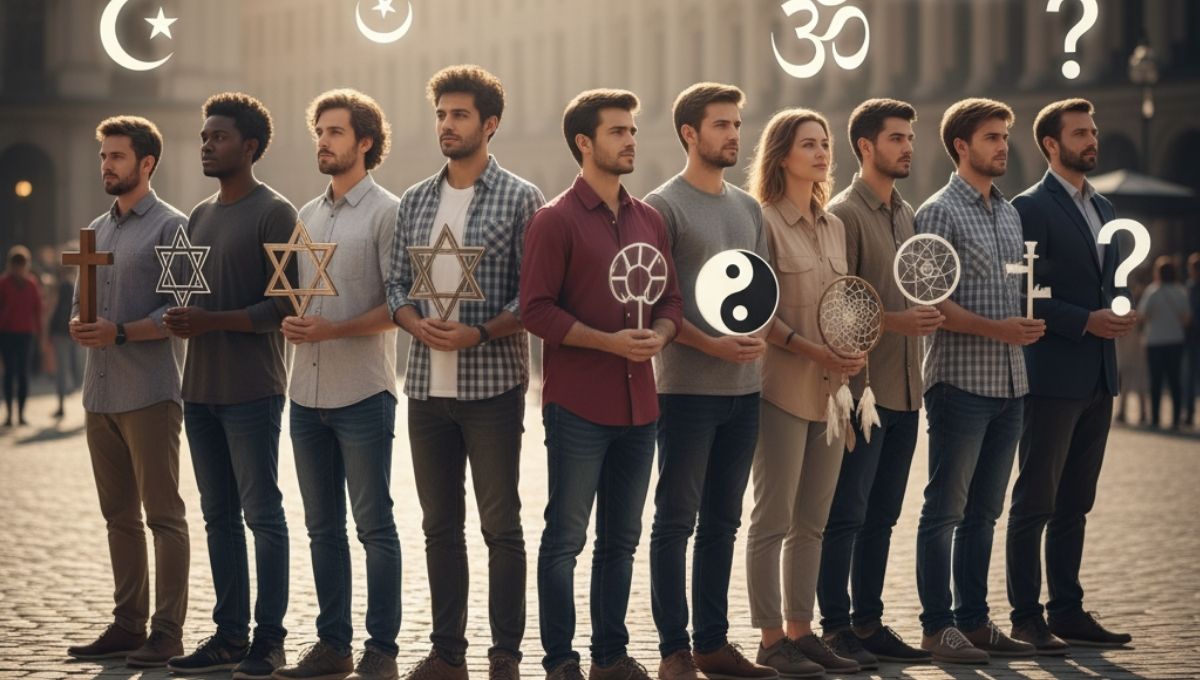
The philosophy of religion studies how terms like “religious,” “spiritual,” and “atheist” shape people’s identities. These labels affect how people act and belong in society.
Researchers like Robert Putnam and David Campbell note that many young people now identify as “Nones”—those without religious ties. But some within this group still find meaning in religion, rejecting “spiritual” labels for being too vague.
In Western culture, religion continues to guide morality, kindness, and social order, offering stability that spiritual trends often lack.
Who Are the SBNR?: What the Data Shows
The SBNR group (Spiritual But Not Religious) is growing worldwide, especially in the US and UK. Studies like Gallup and Census show a rise in people without formal religion—from 5% to over 20%.
Yet this also means fewer people attend church or join group worship. Thinkers like Richard Dawkins see this as progress, while Christian leaders like James Martin view it as a loss of faith and community.
The data shows that while spirituality grows, religion still provides belonging, moral guidance, and shared identity.
“Not Religious”
When people say they’re “not religious,” they often mean they’re rejecting institutions or strict rules. Many see religion as judgmental or controlling. But this ignores the healing and connecting power of faith.
The word “religion” comes from the Latin religare, meaning “to bind together.” It shows how faith connects humans, God, and nature. Without that bond, spirituality can become self-centered, losing its deeper purpose.
“Spiritual”
The term “spiritual” appeals to those seeking freedom, creativity, and curiosity. It often includes yoga, meditation, and nature-based beliefs. While it encourages self-awareness, it can lack structure and consistency.
True spirituality isn’t the absence of religion—it’s the living heart of it. Without spirituality, religion is empty; without religion, spirituality has no roots.
“Religious, but Not Spiritual”
To be religious but not spiritual means living by faith and devotion, not just feelings. It is a way of staying loyal to God through rules, love, and community.
It values honesty, faithfulness, and humility over trends or ego. Real holiness comes from service, prayer, and kindness, not self-focus.
So, Where Do We Stand?

In today’s world, both religion and spirituality have meaning. But being religious without relying only on spirituality reminds us that faith, tradition, and discipline still matter deeply.
Life is not meant for loneliness—it’s about connection with God, others, and yourself. This path requires grace, courage, and love, helping us realize that true faith unites the heart and soul.
Conclusion:
Choosing to be religious but not spiritual means holding onto faith, structure, and community as ways to reach truth and peace. In a world full of personal beliefs, religion gives stability, direction, and connection. Real happiness comes from devotion, love, and discipline rooted in timeless spiritual wisdom.
Read More: