

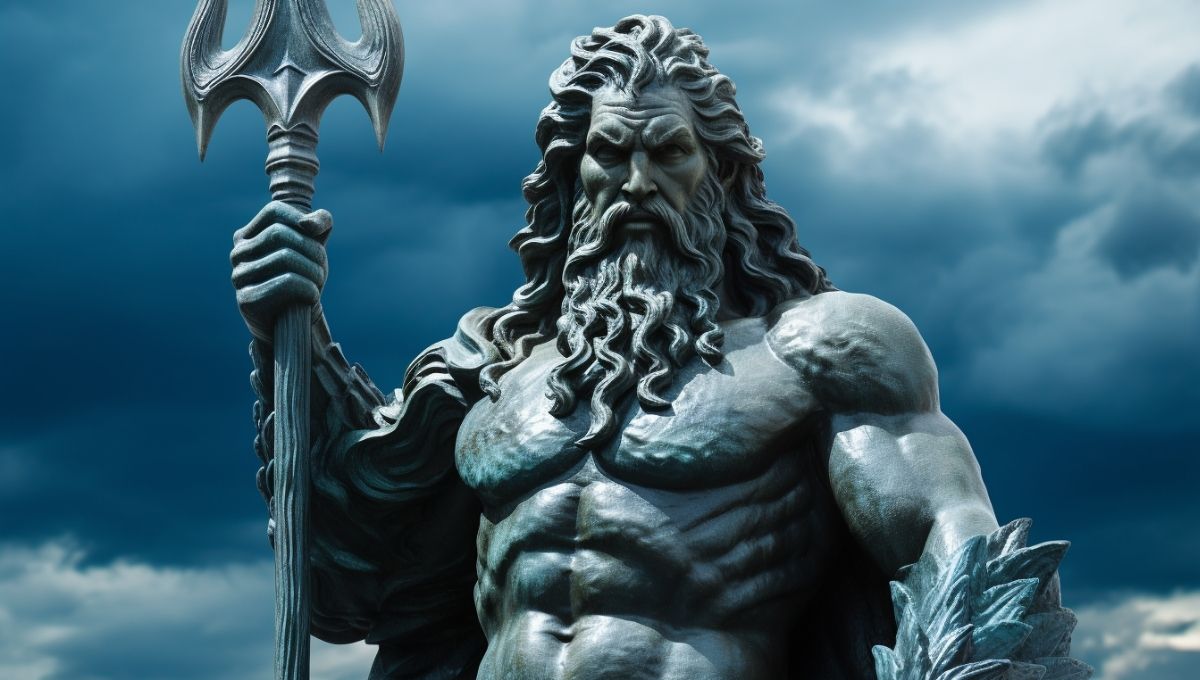
The trident, with its three-pointed design, has passed through cultures, faiths, and myths for centuries. It stands as a many-sided symbol—sometimes feared, often respected, and always powerful. From spiritual meanings to cosmic links, the trident shows a mix of strength, holiness, and universal order.
What is A Trident?
A trident is a three-pointed spear, first used in fishing and battle. Beyond its use, it became a holy symbol in many cultures. Its very shape, pointing upward, downward, and outward, is thought to mean rule over all worlds—heaven, earth, and water. To some, the trident is more than a weapon; it is a spiritual key to unlock divine power and guide human awareness.
Trident Symbolism in Hinduism
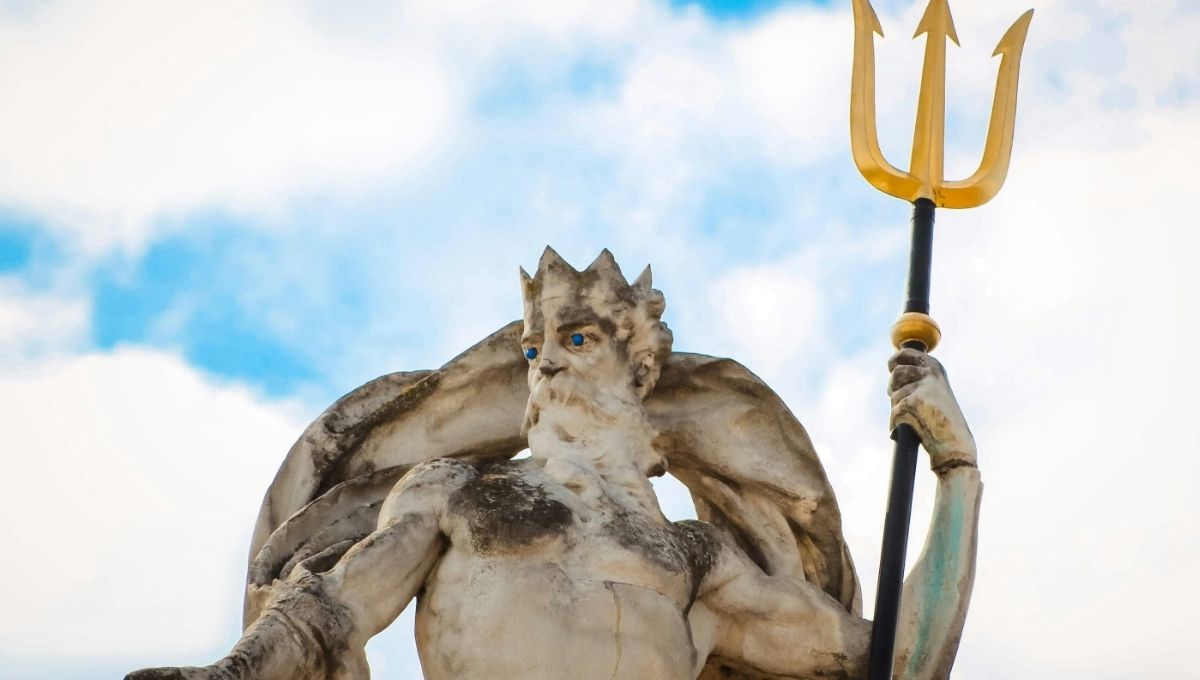
In Hinduism, the trident, or trishula, holds great importance. It is carried by Lord Shiva, the cosmic destroyer and changer. The three points are said to show creation, keeping, and destruction. By holding the trident, Shiva shows control over the material and spiritual worlds, a reminder that all opposites are joined within divine balance.
Trident and the Body’s Energy Flow
In yogic thought, the trident reflects the body’s hidden energy system. The three points stand for the main energy paths: ida, pingala, and sushumna. Balance in these flows is believed to awaken higher awareness and spiritual vision. Just as the trident joins its three blades into one weapon, so must human energy unite toward one path of enlightenment.
Trident and the Three Gunas (Qualities of Nature)
Hindu thought says the world is run by three gunas: sattva (purity), rajas (action), and tamas (stillness). The trident shows these three qualities, each point standing for one. Balance among them keeps harmony in both nature and human life. When imagined, the trident is a reminder that life moves through a careful play of these cosmic forces.
Trident and the Three Dimensions of Time (Past, Present, Future)
Time itself is tied to the trident. The three points stand for past, present, and future—forces that shape human life. To hold the trident is to hold power over time, rising above its passing nature. This idea shows that the divine covers all times, joining them into one endless flow.
The Hindu Holy Trinity
The trident also shows the Hindu Trimurti: Brahma, the creator; Vishnu, the keeper; and Shiva, the destroyer. These three divine powers keep the rhythm of the universe. The trident, therefore, is more than a symbol of Shiva; it reflects the whole cycle of life, reminding humans of their link to the eternal order.
Trident and the Three Sacred Fires (Agnis)
Ancient Vedic tradition speaks of three holy fires: garhapatya (the home fire), dakshina (the southern ritual fire), and ahavaniya (the offering fire). The trident shows these flames, paths through which humans reach the divine. Fire cleanses, feeds, and changes, and so the trident also stands for purity, sacrifice, and renewal.
Spiritual Vibrations and the Power of the Trident
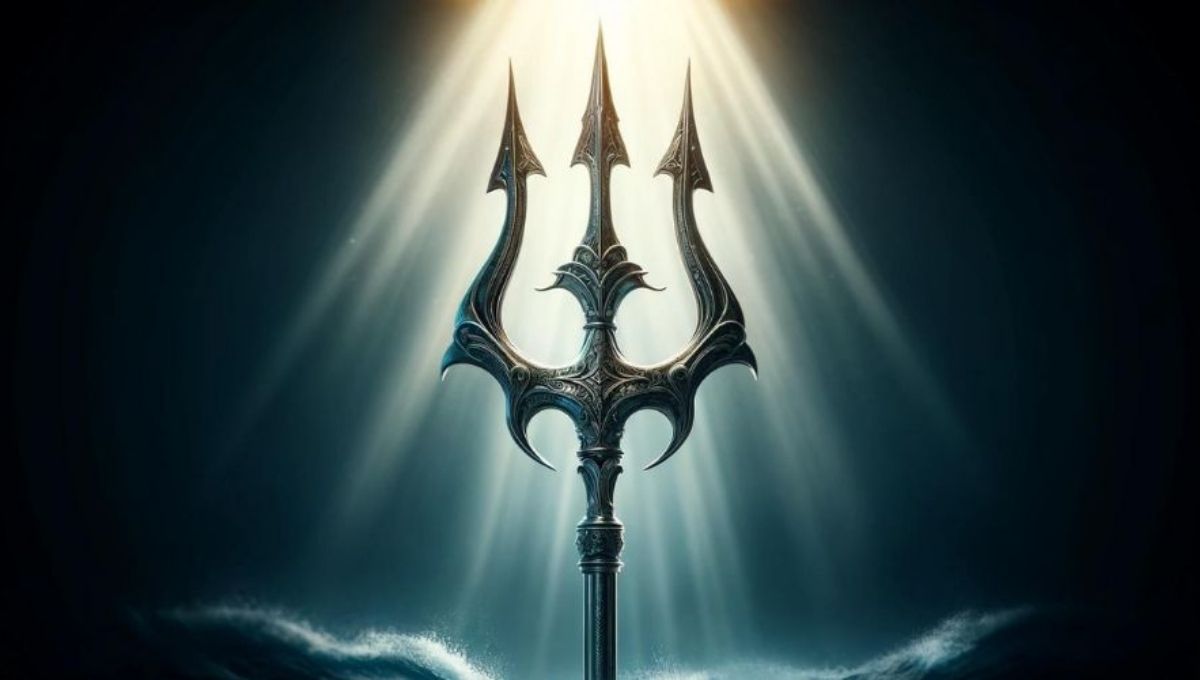
Beyond clear meaning, the trident is said to send out spiritual energy. Each point holds a spiritual force, raising energy fields. To meditate on the trident is to tune into these subtle powers, bringing clarity, strength, and rising above the self. Its shape is also believed to block bad energy, standing as a sign of divine safety.
Trident as Trishakti: The Power of Three Goddesses
In some traditions, the trident is tied to the feminine divine, showing Trishakti—the joined powers of Durga, Lakshmi, and Saraswati. Each goddess brings her gift: bravery, wealth, and wisdom. Together, they form a complete power, carried within the trident. This belief shows that real strength comes when different powers unite.
Trident Symbolism In Astrology
In astrology, the trident is linked to Neptune, the god of the seas, whose realm shows intuition, dreams, and the hidden mind. Its three points show the unseen, the known, and the unknown forces shaping fate. In symbols, the trident is a mark of emotional depth, mystery, and endless imagination.
Trident Symbolism in Buddhism
In Buddhism, the trident shows the triratna—the Three Jewels: Buddha, Dharma, and Sangha. It reminds seekers of their trust in the enlightened teacher, the universal truth, and the spiritual group. The trident also points to rising above desire, hate, and ignorance—the three poisons that tie humans to suffering.
Trident Symbolism in Norse Mythology
In Norse belief, the trident is less common, but its three-part form fits their love of triads. Some connect it to sea gods and their rule over waves. The weapon is also linked to Odin’s wisdom, Thor’s strength, and Loki’s trickery—forces of making, keeping, and chaos within the Norse gods.
The Helm Of Awe
The Helm of Awe (Ægishjálmr) is a strong Norse magic symbol, often shown with prongs like a trident. It was believed to create fear in enemies while guarding the wearer. Its trident-like form showed dominance and invincibility, carrying both protective and attacking power.
Taoist Trident Symbolism
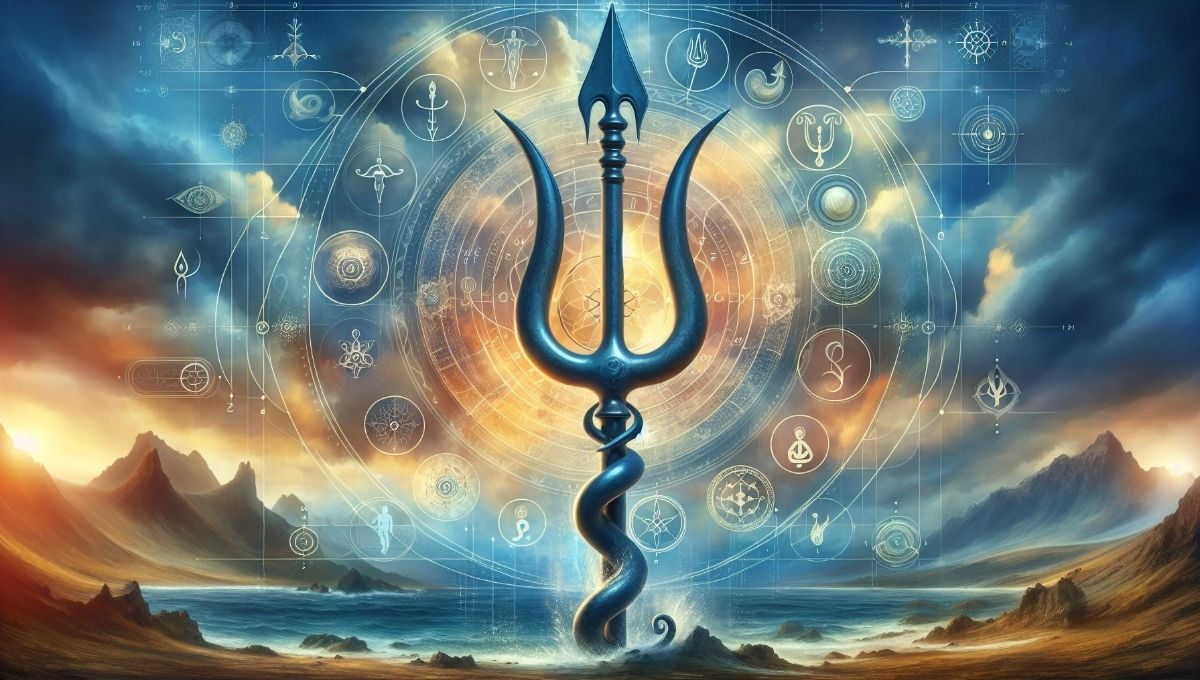
In Taoism, the trident is tied to the harmony of heaven, earth, and people. It shows living in line with the Tao, the great flow of the universe. Just as the trident joins three points into one, Taoism teaches that balance and unity must be found across all parts of life.
Spiritual Meaning Of Tridents
On a spiritual level, the trident shows awakening, rising above limits, and authority. It is a sign of moving between ignorance and wisdom, fear and bravery, life and eternity. Whether carved in stone or used in ritual, the trident guides those who seek higher truth.
Power And Strength
As a weapon, the trident shows pure strength. It is a sign of power—physical, mental, and spiritual. To hold a trident is to command not only others but also one’s inner struggles. Its strength lies not just in its sharp form but also in its meaning of ruling both unity and opposites.
Trinity
The number three is meaningful across cultures, and the trident reflects this timeless idea. Trinity often means wholeness: body, mind, and soul; birth, life, and death; heaven, earth, and underworld. The trident reminds us that completeness comes when three forces join.
Royalty
Across kingdoms, the trident has been a royal sign. Its link with gods and cosmic order gave rulers divine right. Kings and emperors often used the trident as a mark of rule, showing divine approval and supreme control.
Spiritual Direction
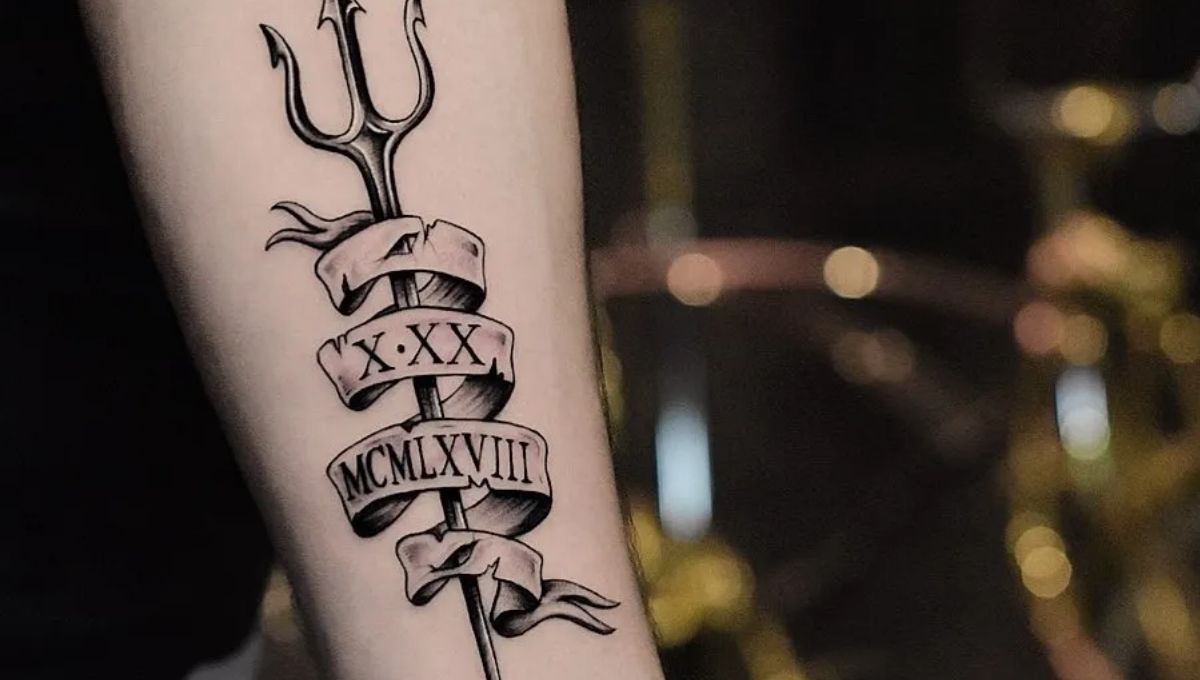
Finally, the trident serves as a guide for seekers. Its three points show many paths, yet all rise from one source. It inspires balance, exploration, and trust in the soul’s journey. In this way, the trident is not just a weapon or symbol, but a guiding light toward spiritual peace.
FAQs
1. What does the trident symbolize in Hinduism?
In Hinduism, the trident or trishula represents creation, preservation, and destruction, showing Lord Shiva’s divine power.
2. What is the spiritual meaning of a trident?
Spiritually, the trident symbolizes awakening, protection, and guidance, helping seekers move from fear to higher wisdom.
3. Why does the trident have three prongs?
The three prongs represent balance across key triads like past-present-future, body-mind-soul, or heaven-earth-underworld.
4. How is the trident connected to astrology?
In astrology, the trident is linked to Neptune, symbolizing intuition, dreams, and the hidden depths of the unconscious.
5. What cultures use trident symbolism?
Tridents appear in Hinduism, Buddhism, Norse mythology, and Taoism, each culture interpreting it as strength, divinity, or harmony.
Conclusion:
The trident is more than a weapon—it is a timeless symbol of strength, divinity, and spiritual direction. From Hinduism and Buddhism to astrology and mythology, its three prongs embody balance, power, and unity. For seekers, the trident remains a guiding emblem toward higher wisdom and universal harmony.
Read More: